
Product — in the making
Cadence
Cadence is the desktop app where every AI agent I use works in one room and shares one brain. It remembers every decision, keeps local models thinking in the background, answers when I talk to it, and holds back any change until it is proven. It plans, designs, builds, debugs and presents. It started life as Symphonee.
- Role
- Founder, product design and engineering
- Timeline
- 2026 — now
- Stack
- Electron, TypeScript, React, Node.js, xterm.js, Ollama, whisper.cpp, Kokoro, GSAP
Six agents, no shared memory
My days run on AI coding agents: Claude Code, Codex, Gemini, Copilot, Grok, Qwen. Each one lived in its own terminal, with its own rules, and forgot everything the moment its session closed. I was the only thread between them, repeating the same context over and over.
Cadence is the room they now share. Shells that survive a restart and come back with their names, repos and last output. An orchestrator that hands work to whichever agent fits. One permission governor, and one ledger of everything the app did, with checkpoints and undo. Not a chat app, not an IDE plugin: the place the agents live.
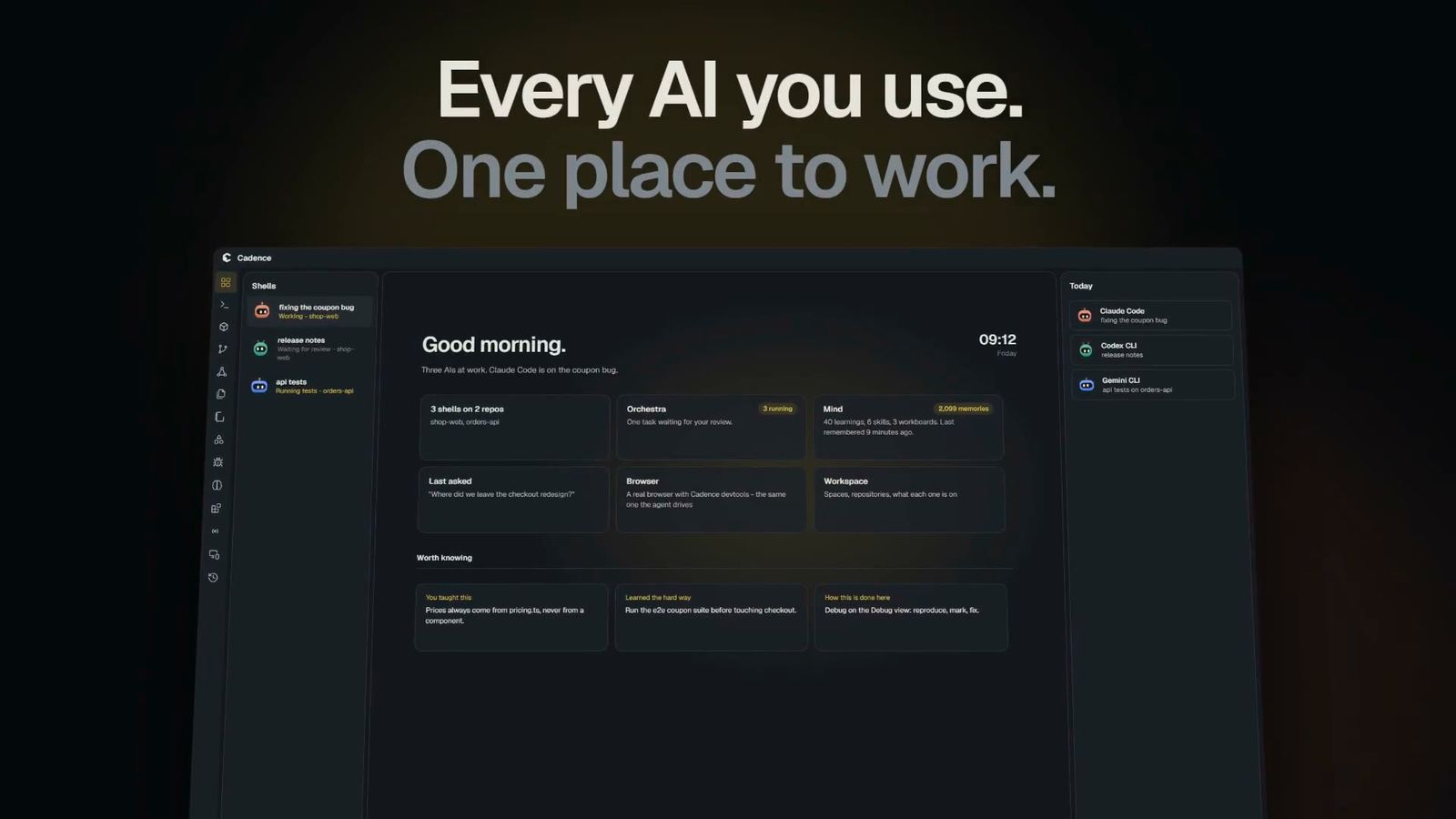
A Mind that never forgets a decision
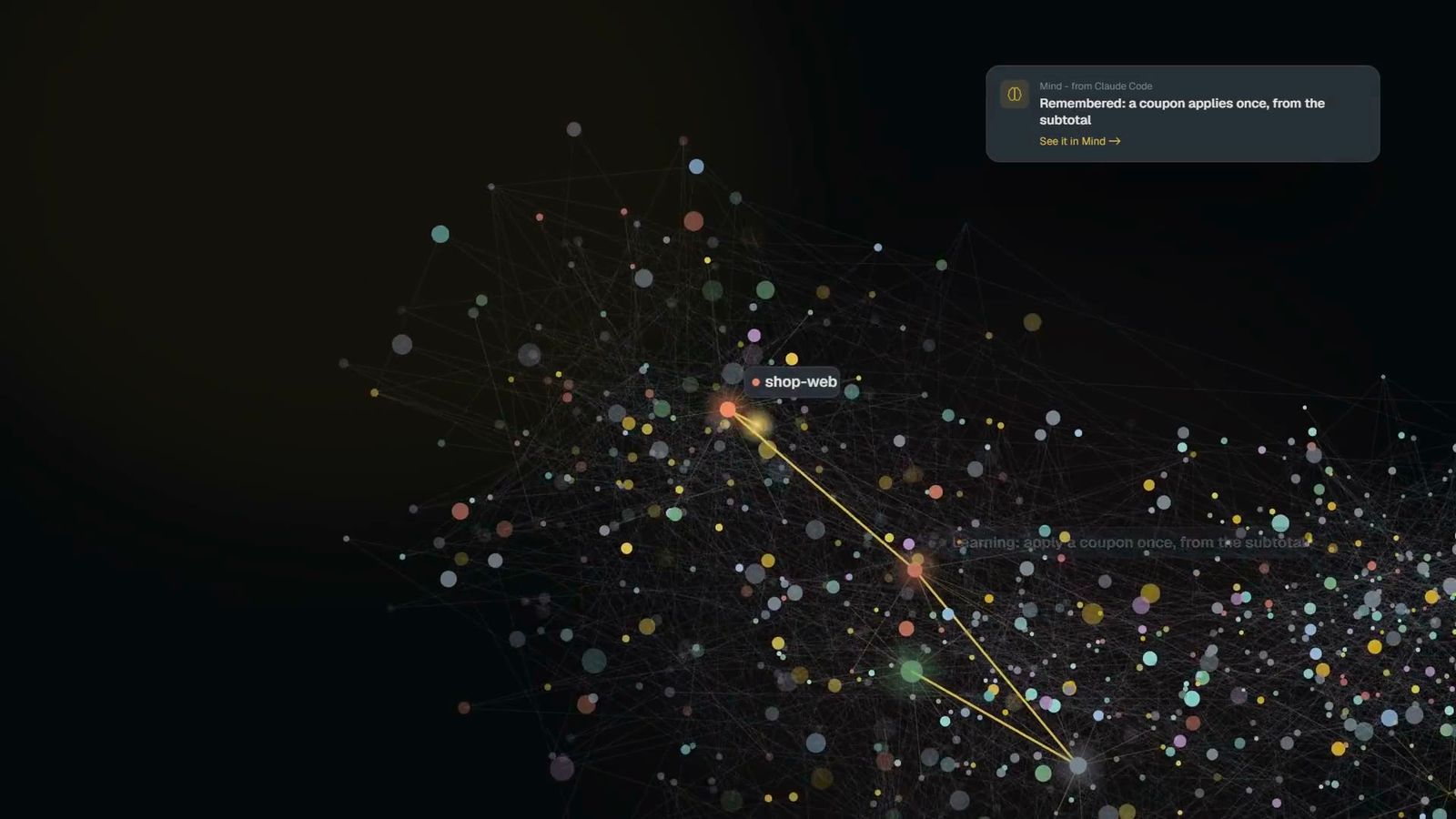
At the center sits the Mind: a knowledge graph of the code, the notes and the decisions, with durable memory cards and skills every agent follows. Each agent reads from it when a session starts and writes back when it ends. What one agent learns on Monday, all of them know on Tuesday.
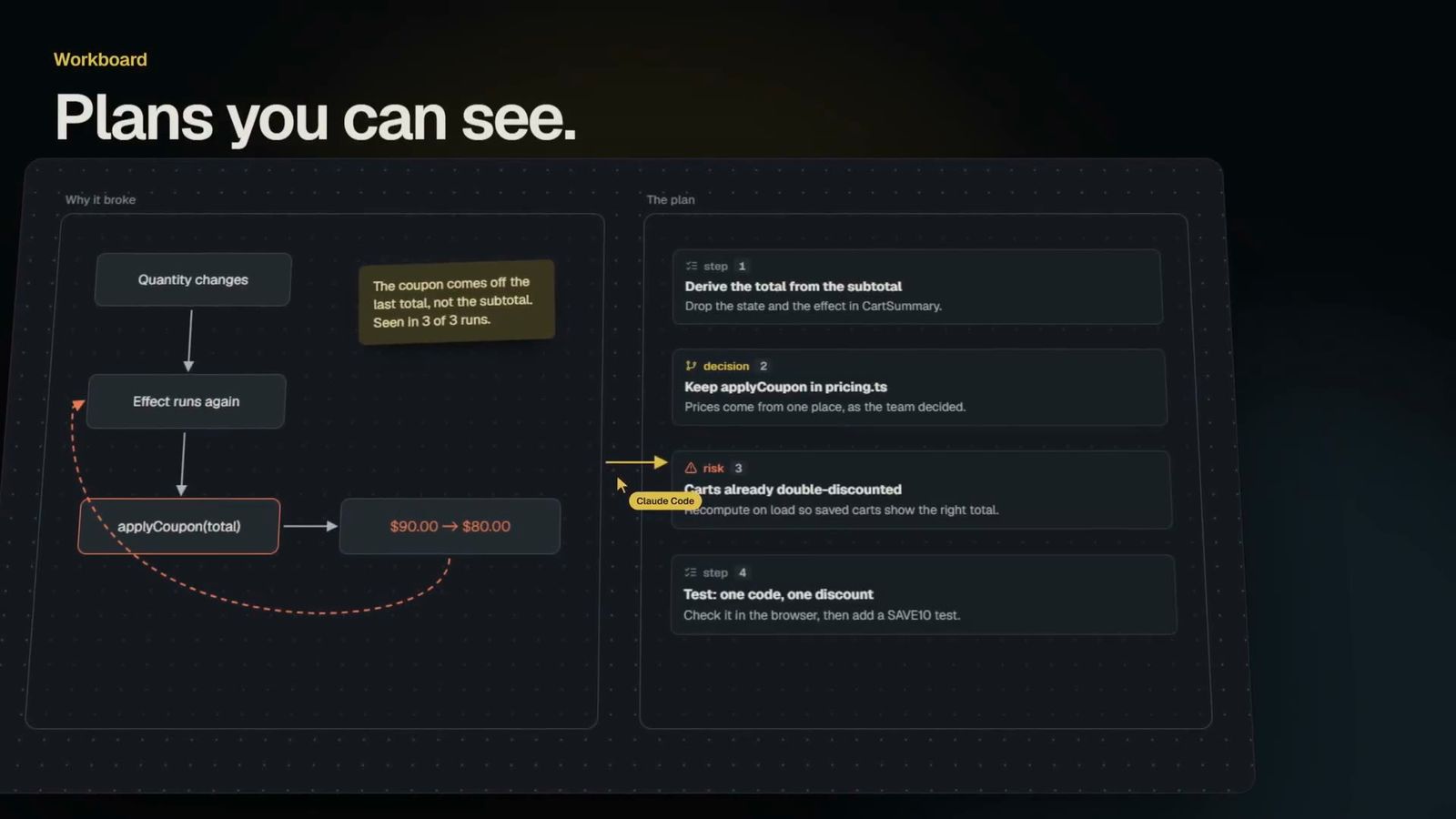
In the film, Claude Code fixes a coupon bug, and the lesson (apply a coupon once, from the subtotal) lands in the graph as a new memory. The next agent that touches checkout starts there, not from zero.
Local models, a voice, and eyes
Local models run on my own machine through Ollama, all day long. They name the work a shell is on from my first sentence and sum up in two or three lines what an agent did when it stops. Cadence picks the largest model the graphics card can carry, so everything else stays quick.
I say "Hey Cadence" and it answers. Hearing, understanding and speaking all happen on the machine (whisper.cpp, Silero, Kokoro), so nothing I say leaves it. I can ask what is on my screen, or circle anything and ask about it: a local vision model does the looking.
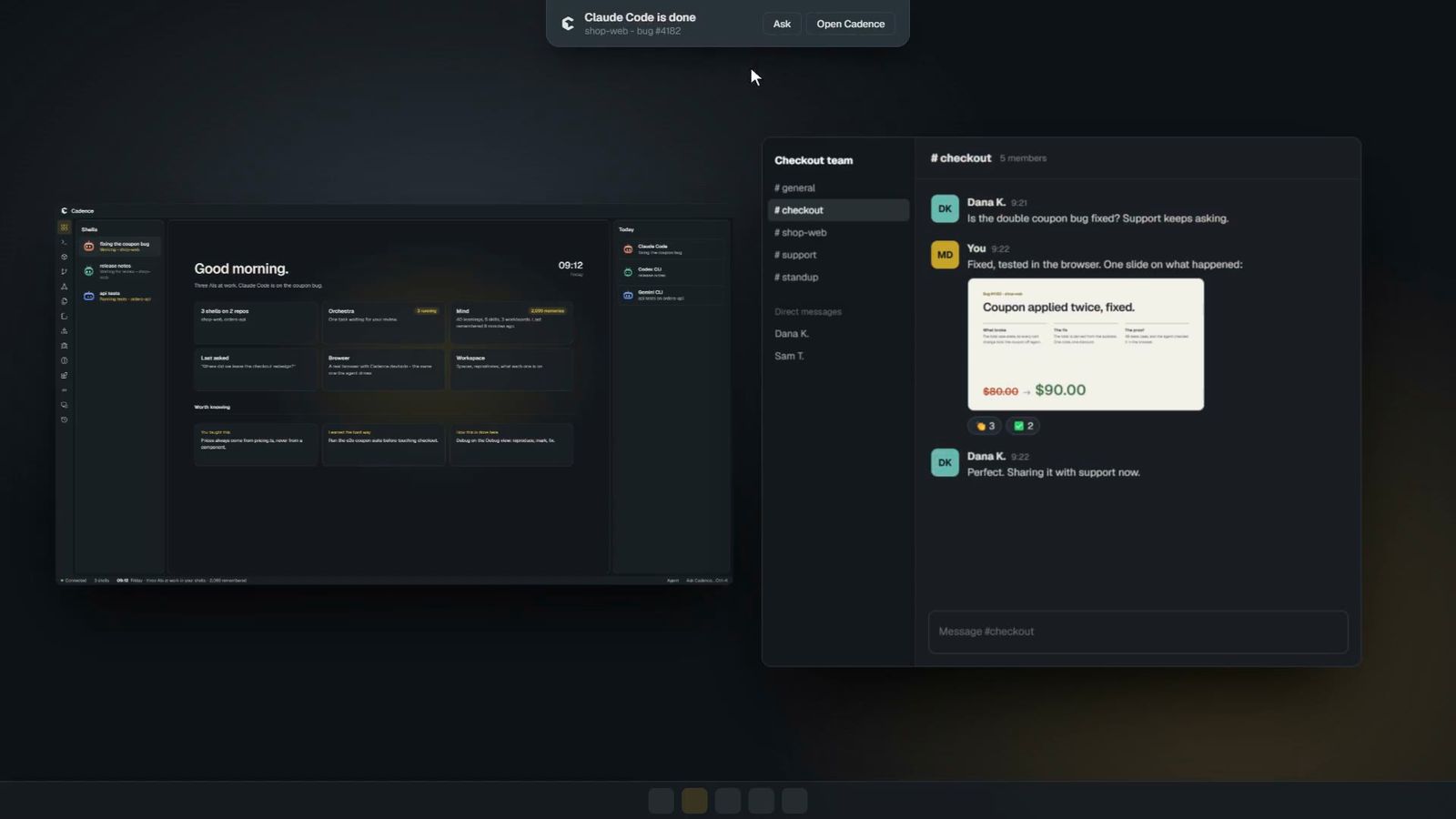
Every agent gets a small animated robot at the edge of the screen. It looks busy while it works, worried when it needs me, and taps me on the shoulder when it is done.
Nothing ships until it is proven
Agents are confident. Cadence wants evidence. It reads every turn through the CLI's own hooks: which files changed, which checks ran afterwards, whether they passed. A turn that changed code is sent back with the command to run until something proves it, and a commit or a push waits for the same proof.
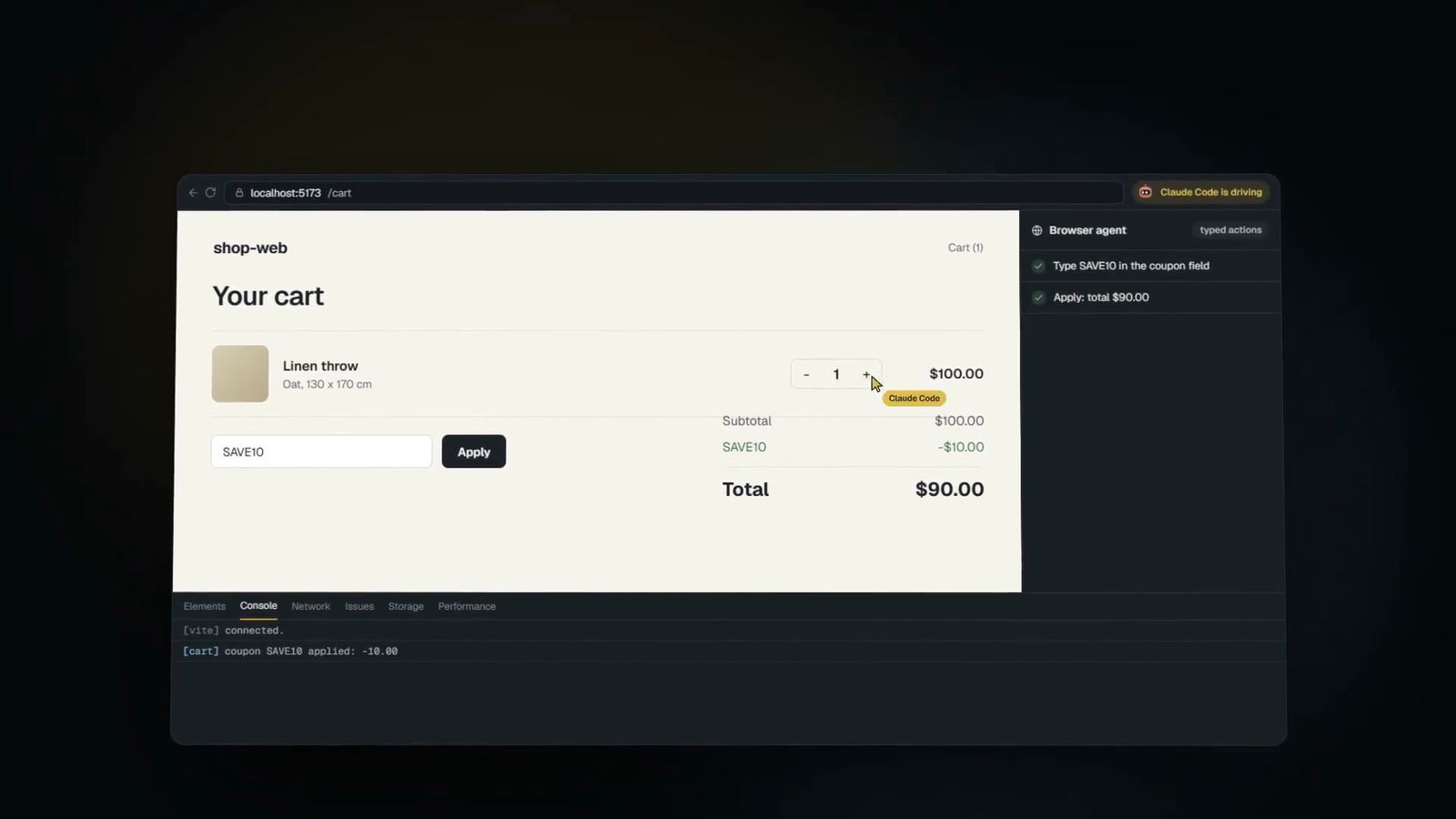
When something breaks, the Debug view comes first: marks backed by evidence on the lines that matter, then the fix. For a page, the agent drives a real browser inside Cadence, types the coupon, changes the quantity and reads the console before it calls the job done.
From the first plan to the last slide
Work starts on a Workboard, a canvas where agents lay out why something broke, the plan and the risks as a designed page rather than a list. Any board can be presented with a laser pointer and a timer, or saved as a PDF.
When it is time to show the work, the Studio records the screen, puts the zooms where I clicked, adds a voice-over in Cadence's voice and renders the film on my machine. Ask for a launch film and a studio agent builds it inside the project, from its real components, checking every frame before it lands.
Where it stands
- 6
- AI coding agents, one shared brain
- 14
- plugins for the whole stack
- 1,319
- commits since March 2026
- 67
- releases since September 16