
Professional
Bath Fitter Design Studio
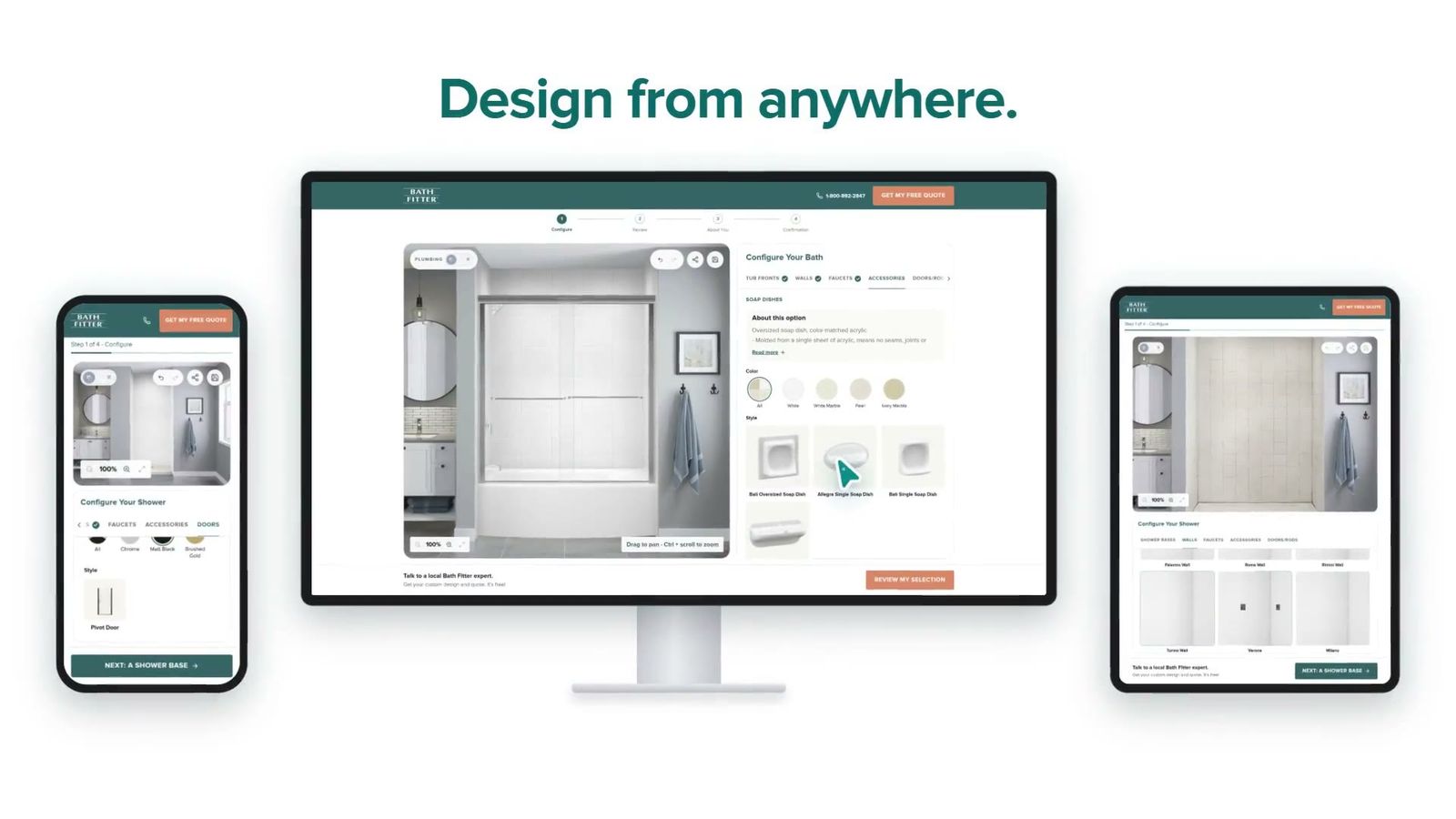
A design studio where homeowners build a new bathroom from real Bath Fitter products, then see it rendered inside a photo of their own room. I lead the web team building it: the configurator, the photo-to-render experience, the booking step and the catalog behind them. It works on phone, tablet and desktop, in three languages, and is launching soon.
- Role
- Lead, web team
- Timeline
- 2026 — launching soon
- Stack
- Next.js, React, TypeScript, Node.js, Zustand, Zod, CSS Modules, Vitest
A configurator anyone can finish
Many Bath Fitter customers are homeowners who would rather not fight with software. The studio had to feel like walking through a showroom, not filling in a form.
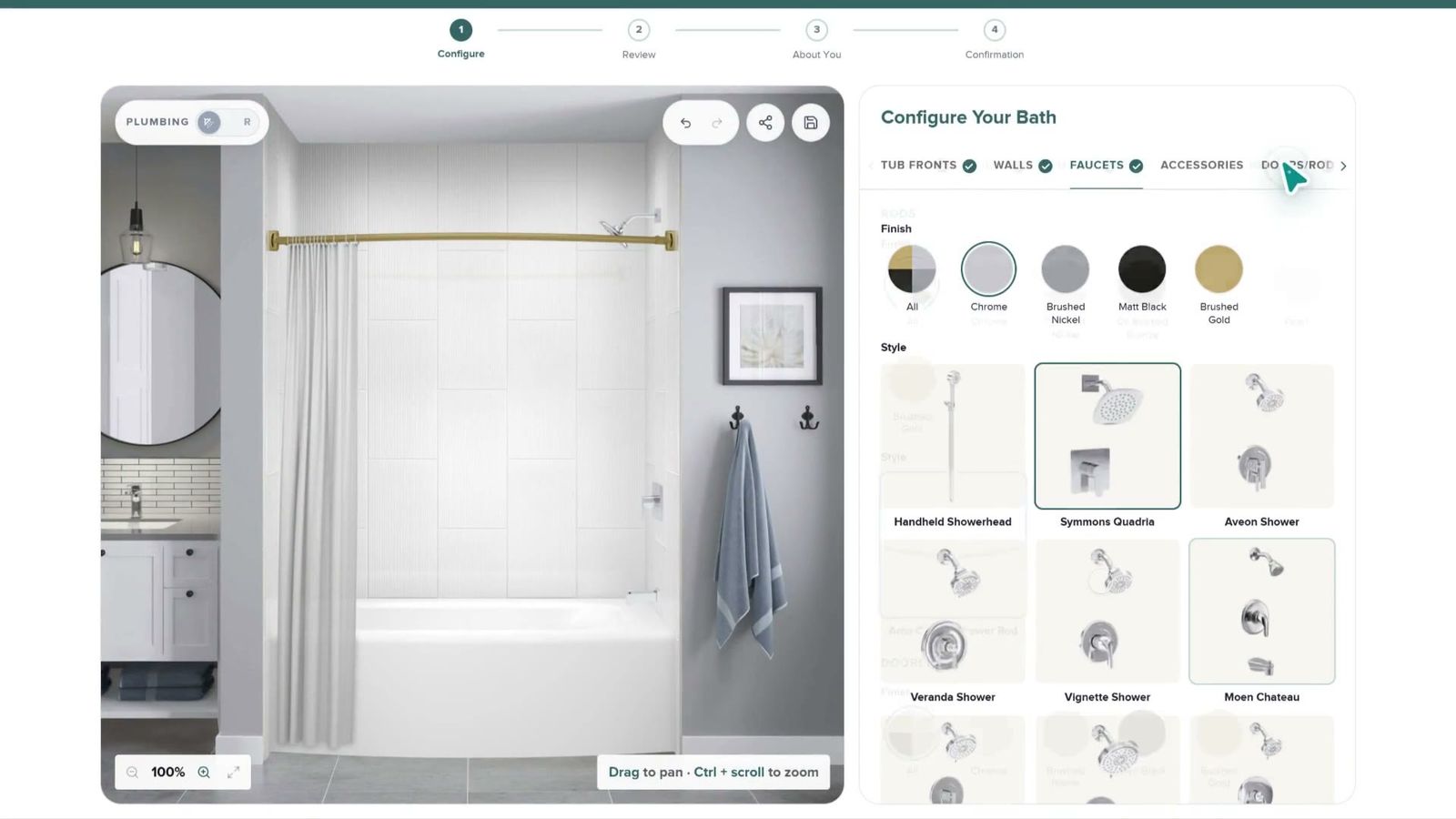
The team built it around four fixed steps: configure, review, about you, confirmation. The path never grows or reshuffles, so people always know how far they have left. They can start from an inspiration photo instead of a blank page, they only ever see options they can actually complete, and products that do not go together are flagged as they choose, in plain words, never as an error at the end.
It behaves the same on a phone, a tablet and a desktop, and a design survives a reload or a closed tab, so nobody loses an evening of choices.
Real products, in your own bathroom
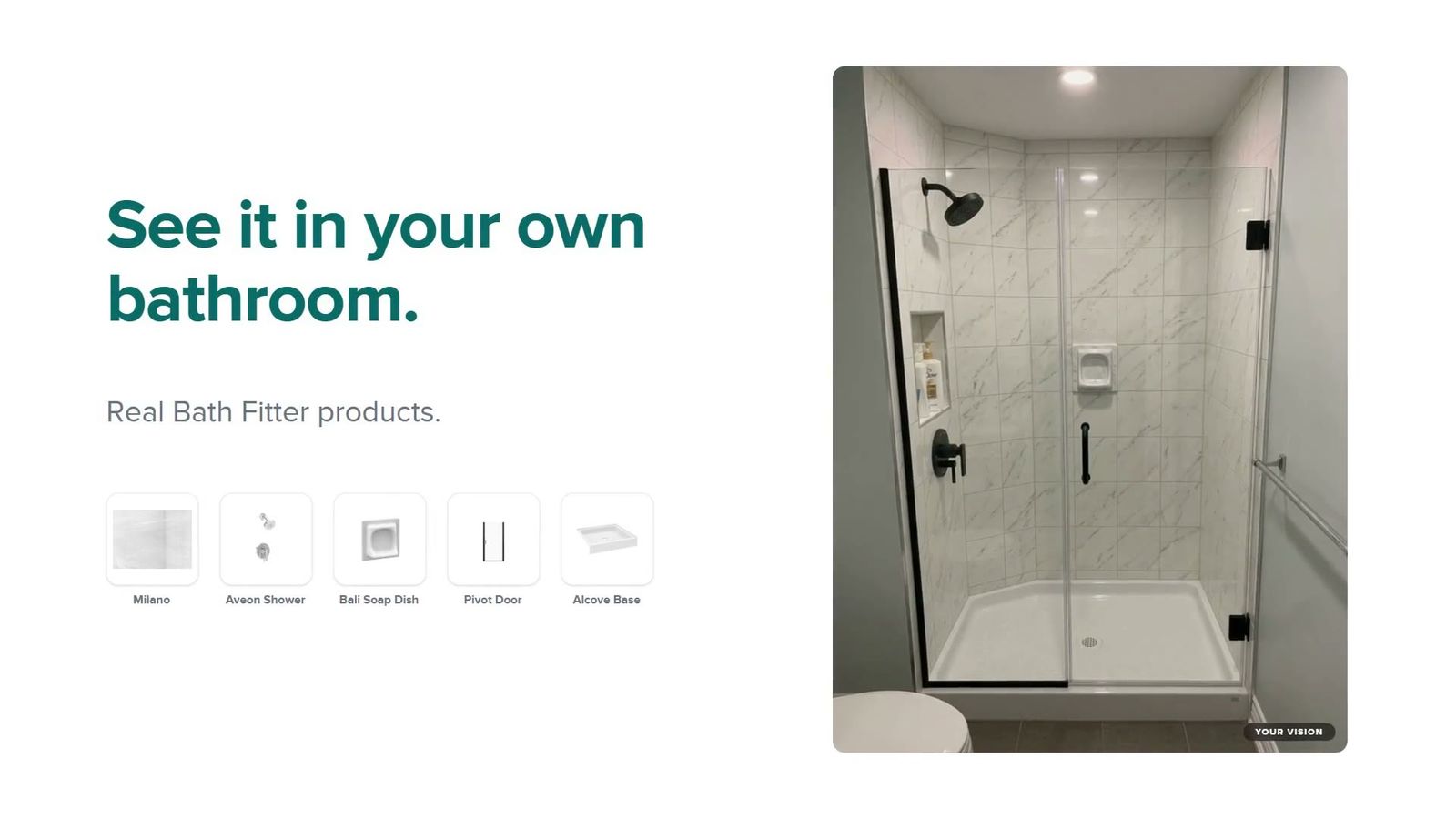
What sells a renovation is seeing it in your own space. Customers upload a photo of their bathroom, and the studio renders their design into it.
Image generation is good at making a bathroom look beautiful and bad at keeping a specific product exact. A wall panel drifts in colour, a tub front changes shape, a window quietly disappears. I treated faithfulness as the requirement, not a bonus: every render is checked against the chosen products and the original room before the customer sees it, and one that rearranges the room or loses a fixture is redone with targeted corrections. Colour is balanced against the parts of the room that were left untouched, so a white wall stays white.
Failing gracefully
A render takes time, and at home things go wrong: the Wi-Fi drops, the laptop closes, a service is slow. For someone who has just shared their details and a photo of their home, a dead end is the worst possible answer.
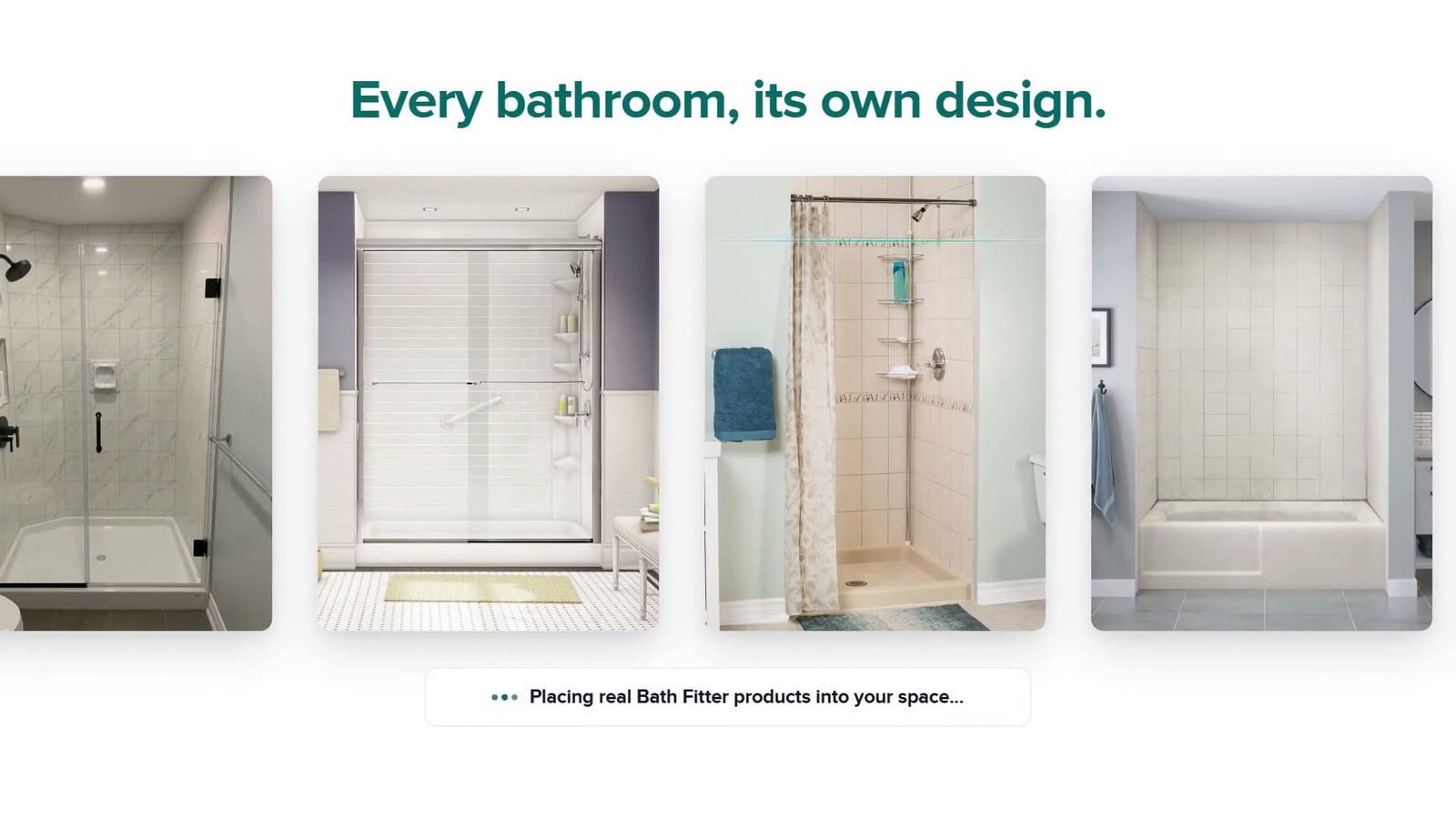
Every recovery path picks up at the furthest step whose work is still valid. A retry reuses the photo, the project and the render already in progress instead of starting over or registering the customer twice, and a reload resumes the session where it was. While they wait, the studio shows real bathrooms and says in plain words what is happening.
A catalog marketing can grow
A design studio is only as current as its catalog. If every new wall colour or door finish needs a developer, the studio falls behind the showroom within a season.
The catalog lives in a content system that marketing edits directly: products, finishes, names in each language, the scenes behind the canvas, and even the rules about which products can go together. The studio reads those rules live instead of hardcoding them, so adding a product or a constraint is an editorial task, not a release.
Where it stands
- Phone, tablet and desktop
- Devices
- English, French and Spanish
- Languages
- Real products, real finishes
- Catalog
- Launching soon
- Status